

Building capacity for courageous connection
Without the second Posture of Love, I am blind to Beauty

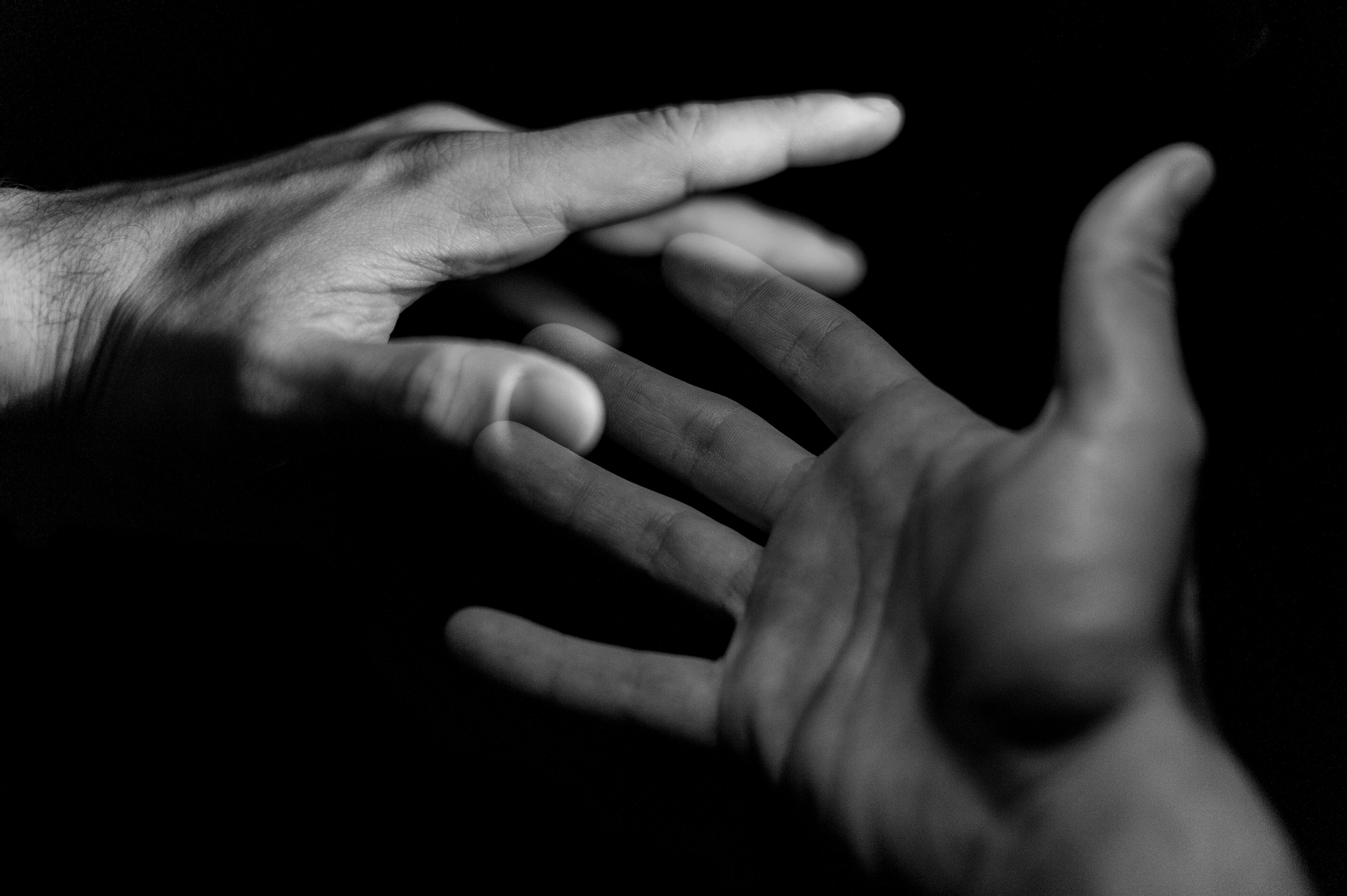
photo by Marco Chilese
Continuing the exploration of how the 4 Postures of Love act as doorways to a life with more Beauty, this article focuses on the second posture, connection.
The 4 Postures of Love are kindness, connection, curiosity and play.
Previous articles in this series:
Some key points from the previous article:
Kindness facilitates learning by minimizing the dissonance associated with mistakes
Kindness accepts reality as it is rather than trying to force things to be “as they should be”
Kindness is built on the intention of well-wishing
Kindness impacts the well-being of both giver and recipient by increasing connection
Kindness may be maternal and nurturing or paternal and challenging
Kindness is initiated by pausing to invite a higher quality of attention
Kindness sees more Beauty by looking past the surface appearance of things, a vision that looks from eternity rather than through time
Beauty is amplified by kindness through self-appreciation and self-confidence
Practicing intentional kindness amplifies the scope of what is deemed worthy of attention, which allows for the discovery of more Beauty
The only way that Beauty can be experienced is through connection.
I can’t experience the beauty of any phenomenon - this person, this melody, this sunset - without beholding it. When I hold this beauty in my being, it changes me.
The mechanism of this beholding is, of course, my attention. It forms a bridge between myself and the other, creating a relationship. We are now connected.
Without attention, simply through close proximity, one being can impact another. But when one being intentionally turns towards the other, the possibility is created for a direct exchange of energy which transforms experience.
When high-quality attention moves in both directions, it can lead to the state of shared presence we call intimacy. A growing awareness of the connection itself may also arise, a realization that something has appeared in the space between us, a “third” entity that is more than the sum of our parts.
However, I am unlikely to arrive to this place, nor experience the full potential of Beauty which thrives in this experience of interconnectivity, if I lack courage.
This is because my capacity to aim and sustain my attention is not merely a skill. It’s also an act of my will. Because sometimes I seem to prefer dis-connection. So, to master the posture of connection, I must also learn to consciously counteract my impulses to turn away.
Within the space of a day, my attention connects and disconnects countless times as I move from one activity to the next. Yet, even when I intend to stay focused on one thing, my attention repeatedly wanders, so I must repeatedly call for it to return.
Recognizing this dynamic and holding the intention to maintain connection (presence) means I pay attention to the quality of my attention. I don’t merely notice what I notice. I notice the patterns of how my attention moves as well as its tonal qualities.
If I commit to this practice, I soon find that some things feel easier to pay attention to than others. Some connections seem harmonious and compelling, while others strike me as dissonant or less interesting. I bias towards the former and against the latter.
My practice of connection depends on kindness. In order to inhibit my impulse to turn away from (what I call) dissonance, I use the posture of kindness to enact my faith that my negative reaction is based on an incomplete appraisal of my circumstances.
For example, I may choose to engage in a difficult conversation with a person who openly expresses animosity towards me because kindness tells me that this person is not inherently “evil”, but merely sees things differently than I do.
My practice of the postures of kindness and connection is aimed at both of us, towards our relationship as a whole. My bet is that if we pay more attention to each other, we will both have a better opportunity to improve well-being.
These intertwined practices are motivated by the desire to experience more Beauty. Kindness widens the scope of what I deem worthy of my attention and encourages me to not to give up when I seem to lack either the skill or will to stay present.
If my attention wanders, I kindly call it back without wasting time to scold myself for my lack of focus. If I resist a connection because I experience difficulty, kindness reminds me that I can only experience Beauty through connection. It motivates me to “face the music” so that I can experience the nourishment of the full range of reality. It reminds me I create blind spots wherever I refuse to look, robbing myself of agency.
While it’s easy for me to think that I merely see what appears before my eyes, that I merely hear the sounds that spill into my open ears, this is not true. My perception is never neutral. It is formed by the mental frames through which I channel my attention. What I believe to be ‘Reality’ is always my ‘version’ of reality.
I place an infinite variety of filters on my perception, based on my whole life narrative, rarely realizing what I do. Nonetheless, my inner conceptions are likely to move in one of two directions - and learning to sense this movement is another crucial skill that helps me refine my capacity to embody the posture of connection.
When I apply filters grounded in fear, I will tend to divide reality into parts. I analyze these parts, judging them ‘good’ or ‘bad’ based on so-called “practical considerations.”
When, instead, I look through the eyes of love, I see more of the whole of my situation. When I encounter dissonance, I’m more likely to be curious rather dismissive.
The more comfortable I become in the posture of kindness, the stronger my faith becomes that Beauty is everywhere. This faith makes it easier to stay connected to Beauty and feel its enlivening inspiration.
As I become more aware of the difference between my experience when I’m connected to Beauty vs. when I’m not, I come to see that this is the fundamental “difference that makes a difference” in all situations.
When I offer presence to another being, it’s a gift, the extension of my kindness. It contains this inherent message:
You are worthy of attention.
This is a gift for both of us because the connection it creates leads to shared presence, which expands our perception and our possibilities.
Each “rep” of returning to presence after attention wanders makes it feel more like home. I learn not to punish myself for “crimes” of dissociation. This makes it easier to form the habit of presence. With time, this requires less conscious effort.
My practice might take the form of trying to sustain focus on my breath as I meditate or what you are say when you are speaking to me.
When my skill is well developed, I see more clearly how my attention is a bridge to depths of Beauty without end. This insight further encourages me to try again when I lose focus, taking me even closer to making presence my “default setting” in life.
When connection is sustained, my awareness evolves.
When I first meet my friend, I might think he is acting grouchy today and feel an impulse to disconnect. Yet, as I listen, I learn he isn’t feeling well or perhaps he has just received bad news. My picture of him starts to take on more wholeness. I shift my posture and tempo, finding a new attitude that is less judgmental, more curious.
As I continue to sustain this connection, I might see other things below the surface of his frustration. Perhaps I witness his care for his children, his dedication to community building or his years of effort to improve his circumstances.
If I include my own inner world and the feeling of connection between us within the scope of my attention, the picture becomes richer still. I may begin to sense how we are mirroring each other, how we are both simultaneously teaching and learning from each other. I might feel wonder as I observe how the unique blend of our sameness and differences continuously constellates new frequencies between us.
I no longer experience my friend as an isolated melody. Now I hear his voice and see the changing expressions on his face within a larger symphony, the overall gestalt of our relationship. I feel how we are both shaping and being shaped by each other along with everything else in our surrounding environment.
(The same deepening of experience can take place in a less dynamic scenario like a sitting meditation. In the beginning, I simply notice my breath coming and going. But as I continue to observe, I might notice that there is more airflow in one of my nostrils than the other. I might notice the difference in temperature between the air as it enters and exits my nose. I might notice different sensations in the left and right sides of my chest as I breathe. As long as I remain present, a seemingly infinite tapestry of detail comes into view and if I practice regularly, I develop the capacity to notice increasingly subtle details.)
So long as I don’t try to take in more than I can hold, the wider my attention becomes, the more it feels like we are sitting in eternity - where no clocks are ticking.
Love is a way of being that is grounded in this feeling of eternity. Fear is the collapsing sense that “time is running out.” Love invites me to rest. Fear loudly urges me to “do something!” - even when there is no clear sense of what to do.
These energies reliably reproduce themselves.
When I rest calmly with the sense that “I have all the time in the world,” I am more likely to act with love. Because I don’t feel the need for immediate “results”, I find it easier to be patient, consider new perspectives, try new things and see all “parts” from the perspective of the whole.
But if “there’s no time to think”, I’m more likely to feel like I’m driving blind. I’m afraid that “something might go wrong” at any moment. I’m more likely to act impulsively and look for someone to blame if things don’t go my way.
As the distinction between these relationships with time becomes more familiar, it becomes easier to observe fearfulness and invite myself to slow down.
When I do this, I’m not asserting that “everything’s fine.” I’m simply reminding myself of the value of connecting to more of my whole experience. From here, it is far easier to make wise decisions and take actions that move me towards greater well-being.
No matter how much I develop the ‘technical’ skill of connection (by taming the tendency for my attention to wander and increasing my commitment to its return) I will inevitably be confronted by my fears.
In these moments I must call upon my will to maintain connection.
Sometimes I don’t know how to transcend fear. Nonetheless I can decide that fear won’t control me. Instead of turning away from what frightens me, I walk towards it. This is an act of courage which activates my creativity.
As dramatic as it might sound, the process often unfolds by degrees. While certain circumstances might ask for all-or-nothing decisions, I can also experience my “edge” as a place to expand capacity in baby steps. Instead of staying in a difficult conversation for only five minutes, maybe I can stick it out for ten.
Furthermore, what I call “courage” might be mere stupidity if I ask myself to take on more than I can handle. While chasing “self-improvement”, if I repeatedly overwhelm myself, I will rarely experience success. This makes it more likely I will slide back into fear and self-doubt.
Here is another place where the postures of kindness and connection interact with each other. It is both kind and wise of me to recognize when I am “in over my head” and retreat when necessary, giving my psyche and nervous system the opportunity to recover. Having resourced myself again, I will be more likely to come to my next difficult encounter with confidence in my capacity to test my edge.
When I have established the posture of kindness as my dispositional baseline and organized my attention through the posture of connection, I am now available to encounter Beauty and be transformed by it.
When these postures become my habit, I realize that Beauty is infinite, that there is always more of it to discover than what I am aware of right now. The experience of this overflow invites me to move further beyond myself, into the postures of curiosity and play, which will be addressed in future articles.
Join the 4 Postures of Love online workshop to explore kindness, connection, curiosity and play as integrated states of being that include body, mind, heart and soul through guided somatic, meditative and relational processes.
Workshops offered Tuesday July 9 at 1pm EST & Thursday July 11 at 7:30pm EST.