

Family energy
How what we see and what we don't see moves between us

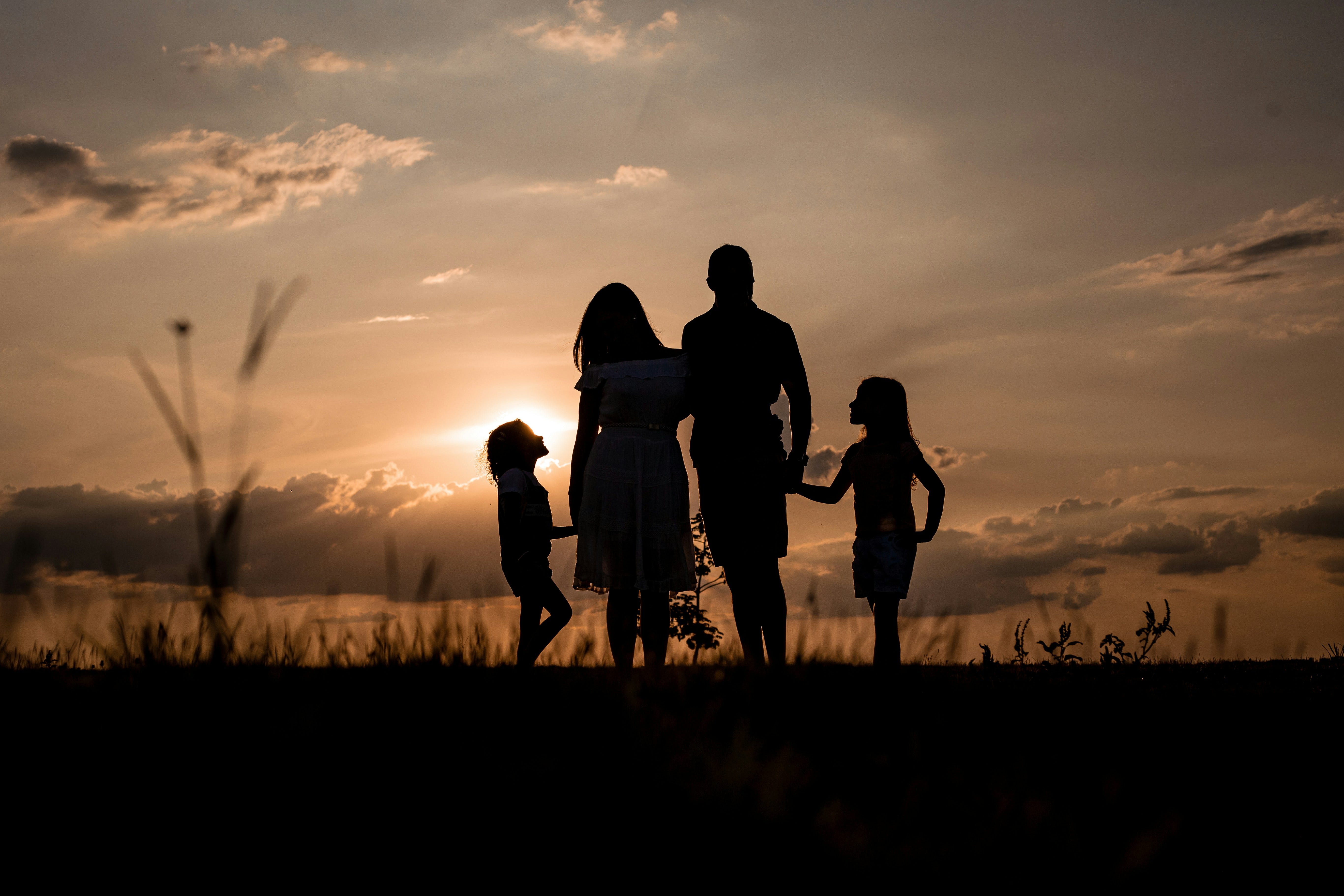
photo by Tá Focando
In the cafe today, two families in a row shared their energies with me.
It wasn’t my intention to eavesdrop, but they sat so close that it wasn’t possible to fully separate our energies. Then I kept getting fascinated by what was happening, because our “collective nervous system” is already what I think about all the time.
The first couple had three young children, old enough to talk and sit on high stools, but not old enough that their parents could do anything besides tend to their needs and wants moment by moment. The second couple arrived with two daughters, one a teenager, the other, I heard the father say, was 21 years old.
In both families, the parents dialogued about how best to interact with their kids even while doing so. The younger kids mostly missed this exchange, being focused on the distribution of pastries and the nearness of mommy. But the teenager got an earful of her parents’ disagreements over how to talk to her older sister.
The first couple was mostly symbiotic, but the mother felt the need to intervene on the father when he was talking to the kids. Holding up both hands, she said, “Lower your voice. You’re shouting!”
The father seemed annoyed and didn’t acknowledge his wife’s reprimand. But he seemed to take her advice on board. Minutes later, they found a shared rhythm, functioning together efficiently, if a bit stiffly, as they managed their children whose attention continued to ping in all directions.
In the second family, the older daughter was upset, apparently because her drink order wasn’t what she had wanted. Yet she didn’t seem merely petty to me. It looked like she was having an awful day and this was the last straw.
But her father didn’t see it that way.
“C’mon… Resilience!” he barked as her face wilted. She didn’t look at him, but glanced at her mother who met her gaze and said, “It’s ok.”
When she went to the bathroom, the father said to the mother, “You’re coddling her!”
“You’re being too harsh!” his wife responded.
The teenager looked at her phone with a tense poker face.
“She needs to learn that a bad coffee isn’t the end of the world. She’s 21 years old. She needs to bounce back!” said the father.
In myself, I noticed agreement with this general perspective on 21-year-olds and bad coffee even while his tone felt unnecessarily cold and abrasive.
When the older daughter returned her mother bought her a new drink. She quietly acknowledged it was better, but she still wouldn’t look at dad. Meanwhile, he kept up a running commentary about the taste of his sandwich and the family’s plans.
“Who’s ready for Wicked For Good?” he asked, engaging the teenager.
The young woman covered her face with her hands and long hair, crying softly. Her father noticed, but acted as if he didn’t. Five minutes later she emerged to join the conversation which had now moved on to the new season of Stranger Things.
I took in all these scenes through the limitations of my own eyes and ears, my own mind and heart. I watched my own breath and body respond to each of these souls as I imagined their inner worlds. In certain moments I felt resonance with each parent and each child, touching different parts of my own psyche and history.
Many times I felt judgmental and asked myself to slow down to see the human being who, in each case, I assured myself, was doing their very best with all they were carrying and all they were encountering.
It’s a practice - and much simpler to do as a third person observer than when I’m in the flow of my own interactions.
We all live in our own subjectivity. In the end, we really can’t fully see each other.
But if we hold the intention to do so, we can come just a little bit closer.