

Unconditional love vs. transactional culture
When human instinct runs into the dead end of rational calculation

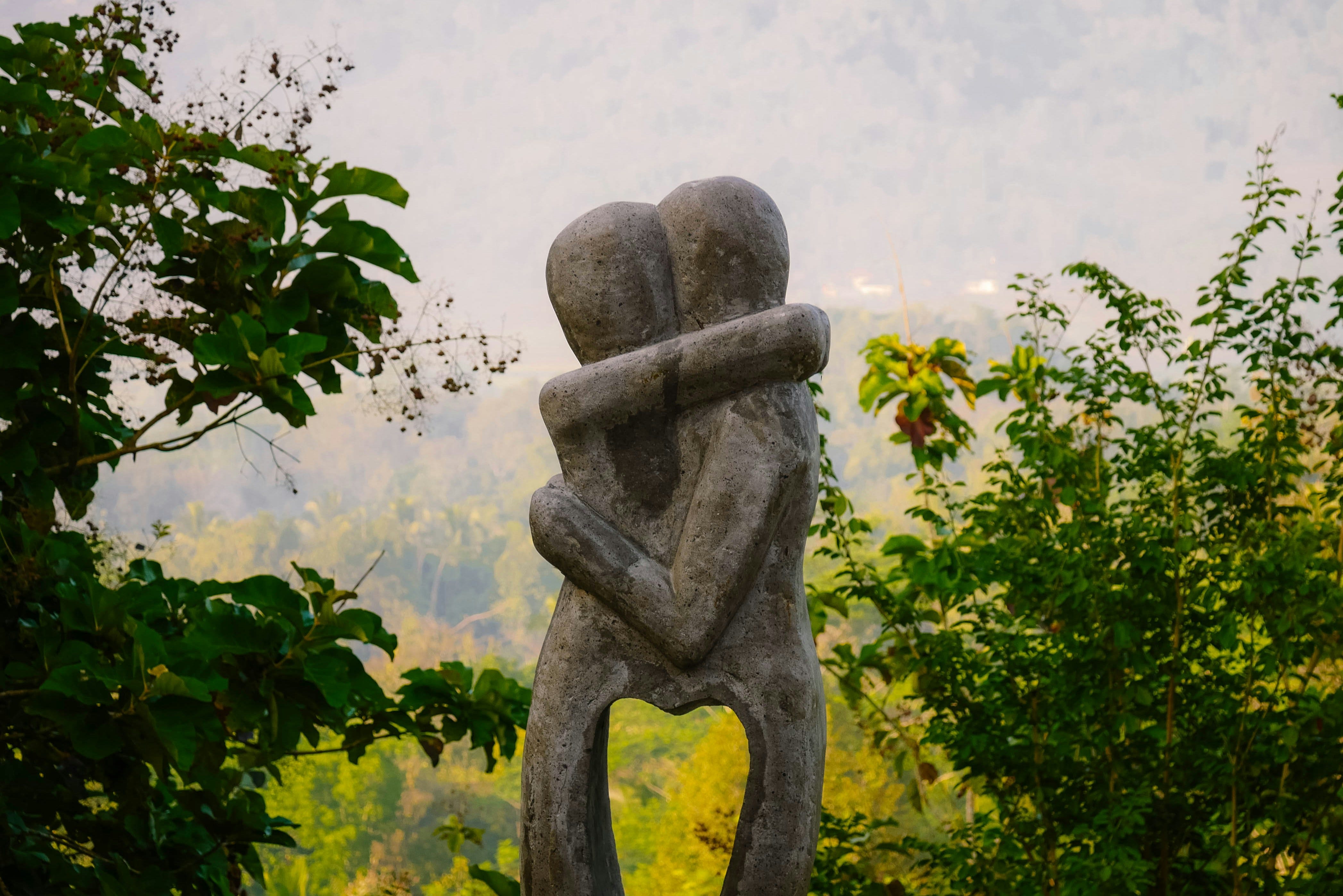
photo by Marcel Ardivan
When we love, we see differently.
When we see the shortcomings of our loved ones, this isn’t all we see. We see the difficulty on the surface while sensing a mystery in the depths.
And we’re curious.
True unconditional love accepts the beloved for exactly who they are. It is willing to forgive all mistakes or harm done because it is motivated by the desire for the beloved’s well-being and unconcerned with perfection or even justice. The misdeeds of the beloved may well be painful to receive, but true love embraces that pain as part of the whole of its expression.
In this way, love cannot be reduced to affection, commitment or desire. Love is a way of being and an enhanced mode of perception which sees more of the whole of the beloved than would otherwise be possible.
In practice, our everyday experiences with loved ones tested us quite specifically.
Can I still love you if you say this? When you do that?
To enact love is to take on a radical posture which repeatedly challenges the ego and eventually puts us in direct conflict with the dominant patterns of the culture in which we find ourselves, despite our deep longing to love and be loved.
---
A man was recently telling me about his efforts to reawaken the spark of his marriage.
He was showing up regularly for “quality time” with his wife each night, but felt like he was just going through the motions. Even while doing his best to be a “good husband,” he found himself mostly thinking about the moment when he could retreat to his study again. He feels most like himself when he is alone.
I casually suggested buying her flowers to inject some novelty into the situation and as a gesture of affection. He replied that he would likely pick the wrong flowers and she would criticize him for it.
Instead, he offered his wife a massage. She put on headphones to listen to a podcast while he worked on her shoulders and neck. Eventually she told him it was too intense and asked for a lighter touch. “I didn’t see the point of that,” he told me, insisting that a deeper massage is always better.
When I asked if it might not be better to track the preference of the person receiving the massage, he paused to think, then concluded, “I’m selfish. I’m not very caring.”
When he was growing up, his parents mostly treated him like a nuisance. “You ruined my life,” his mother once told him. He understood that his parents’ love was earned with good grades in school and performed at the top of his class. He went on to start his own business, earning enough to retire before he turned 30. His parents were “satisfied” with him, but remained cold and distant.
It sounds to me like you never experienced true care,” I told him. “It makes sense that you don’t know how it’s done.” It seemed this was the first time it was suggested to him that his relationship challenges weren’t simply the result of some inborn defect.
He came out of retirement to build a new business in his 30s after marrying and becoming a father. “I’m a grinder. My head is usually filled with numbers,” he told me, adding that “everything I do is for my family.”
---
Most of us learn in school that the smart kids are the ones who know the answers to the teacher’s trivia questions, which is why their hands go up first. It’s basically a race where someone will be first and someone will be last.
But love doesn’t care who is first or last.
As natural as it is to love any infant, we don’t usually sustain that way of being once the little human grows into a big one and reveals traits of ungodliness.
We get trained by the culture to think that some people are more lovable than others. Some people are more loving than others.
It’s all nonsense.
But what’s not a joke is that in a world where God has been displaced by the “free market”, we have a lot of unlearning to do before we can fully love again.
Many of us feel ambivalent about religion because we’ve had no training in it and we’ve heard and seen too many horrors that result from food fights about “God.” Understandable as that may be, without religion we rarely receive encouragement to love devotionally, to love without needing a “reason” to do so. Most of us don’t know what kind of love tastes like.
Before we realize it, even our most intimate relationships get defined by the transactional nature of everything the culture feeds us.
Reawakening unconditional love feels like coming home. But before we arrive, the journey can feel like rejecting everything we’ve ever been taught about survival. Practicing the love we were naturally born to express can conjure the thought that we are acting “irrationally” - which might as well be a sin.
Why would you put more attention on the other person rather than yourself?!
Why would you ever forgive someone who wronged you?!
Why would you ever give anything if you got nothing in return?!
It’s one thing to ask these questions in a casual conversation. My mind readily comes up with answers that remind me that I’m a good person after all. “I’m not selfish!”
It’s another thing entirely to faithfully answer these questions with my body while the voice in my head tells me I’m acting irrationally, threatening my survival.
We all know that our addiction to screens is screwing us up, but it’s not just the way it fries our brains. It’s the way it accelerates this deep inner conflict between what makes us human and the laws of social Darwinism.
Will we be good lovers or good citizens?
This is why so many people find it challenging to find joy in their bodies these days. So often when we feel moved to act spontaneously and generously, a voice appears to question if we will get a “good return on this investment.”
(If you recognize this inner conflict as a regular feature of your life, it’s just as likely that this is the source of your back pain rather than your “bad posture.”)
When love reigns over us, our minds are quieter and our movements less calculated. We embrace loved ones not because we should, but because it feels good. Yet before this becomes natural again, we might need to reframe old memories of getting ourselves in trouble - and endangering our access to love - for exactly this kind of behavior.
We were miseducated.
Love is not a prize for high performers.
Nor is its expression a performance.
Love loves coming in last and cheers for every runner.
Love doesn’t think it is making a sacrifice.
Love knows that selflessness can feel like bliss.
If most people related this way, they would produce a different culture than the one we live in today. But since this is the culture we were born into, this is the context in which we are asked to love.
Luckily, it’s still our instinct.
If we pay close attention we’ll notice:
I breathe better when my beloved breathes better.
When I get curious about my beloved, more of my beloved comes into view.
When my child reminds me how to be childlike, the gap between us diminishes.
These insights don’t confuse the body, but they do perplex the rational mind. This is the true importance of the phrase, “get out of your head!” that we so often scold ourselves with. Those words point us in the right direction, but they also make us feel like dummies for doing what we’ve been trained all our lives to do.
When we confront the symptoms of modernity that live in our bodies and make the turn to “self care” we often find ourselves caught in the vice grip of a new conflict.
On the one hand we fear we are being “self indulgent. On the other hand, we use our newfound awareness that highlights our lack of embodiment as a new reason to notice how we don’t “measure up.”
But when we stop trying to perform, we can stop grading our performance. When the anxiety of getting a bad grade is lifted away, tension is released. When the body relaxes and the breath expands, our eyes can soften and widen, allowing us to see more of the humanity of each person we encounter.
Before this feels easy, we can take a leap of faith that helps us bridge the gap.
We can look at each person as if we were looking in the mirror and say to ourselves, “You are worthy of love and so am I.” Then we can stop calculating and simply watch to see what we do when we have no doubt that this is true.
If your muscles of unconditional love have atrophied
in the toxic atmosphere of today’s algorithmic competition for attention,
you can reconnect to your natural loving instinct with this meditation.
Or dive deeper to find out what gets in the way of your love
at an upcoming community practice with The 4 Postures of Love.
Click below join the next workshop.